Rishabh Kaushik
In today’s world, stress and change often are thought of as the same thing. Stress is a physiological and psychological response to situations the body and mind find to be overwhelming.
We’ve all had crazy weeks at work. But when we look back on our tiring week, we find it satisfying or we feel exhausted and dread that we have to do it all over again.
According to a 2020 survey, 79% of employed adults said that they experience commonly work-related stress.
Out of these, only 10% said that stress was positive, and the other 69% said they didn’t feel that the stress they are suffering was positive.
In simple words, there is a very big difference between good stress and bad stress. Good stress lead to improvement and great outcomes, but Bad stress leads to poorer performance and can have a serious impact on our health matters, money, work, family issues, regular daily hassles, etc.
Stress affects men and women differently. Stress plays a major role in the development of several mental illnesses, including post-traumatic stress disorder, depression, and anxiety- these are more common in women than men.
Stress is described as a state of physical or emotional tension, usually in reaction to an impending challenge or threat.
It’s the activation of the body’s fight or flight mechanism. In the past, this would have been in response to physical threats, but today this is mostly been in response to perceived threats or challenges, which can be anything from a dispute with a colleague to worrying about your future.
The main issue with stress is that body cannot differentiate between physical and psychological threats.
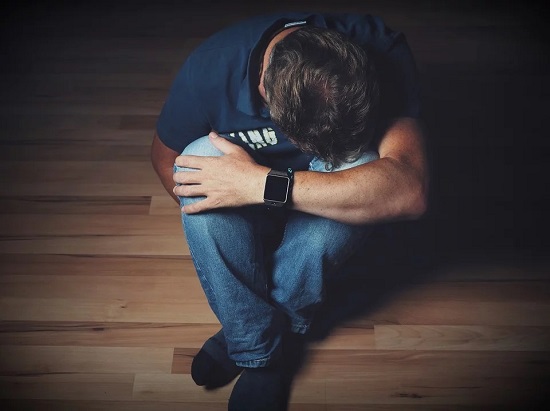
Stress can increase your heart rate, breathing rate, and blood pressure in order to fight or run away from the threat.
But, it also slows down your immune system and digestion. To differentiate between stress we categorize them into two categories i.e. Acute Stress and Chronic Stress.
Acute Stress is the kind that builds up quickly and doesn’t last long. It is related to a particular task or project and when it is finished the stress goes away. This is considered good stress.
Chronic Stress is more of a persistent type of stress. It can have a serious impact on your mental health and your physical health as your stress system isn’t designed to help with these types of situations.
It is linked to the feeling it overwhelm or lack of control. This is likely to be things like personal issues with colleagues which can be long-term and very difficult to fix.
How do you know 8f you are stressed? It may sound silly, but some people won’t be able to notice, but if you are chronically stressed for a long time you may forget what it is like not to be stressed.
There are some common symptoms i.e. Diarrhoea, constipation, fatigue, difficulty in focusing, headache, and stiffness in the neck or other areas.
The more concerning issue is chronic stress is a major contributor to Heart Disease, Diabetes, Depression, Anxiety, High Blood Pressure, Obesity, etc.
We often ask ourselves how we manage stress. “Resilience” how it is related to stress? It is the ability to power through difficult circumstances and come out to the other side.
Many people think that resilience doesn’t feel stress, but that is not the case, they do when things don’t go their way.
But the main difference is they know how to manage their stress so that they keep it under control. Resilience is a characteristic that people show in the face of chronic stress. It allows them to manage their stress.
There are many ways people manage stress and reduce the overall stress of day-to-day activities.
- “ Try new routines” from scheduling bath time and bedtimes to blocking off time to plan and prioritize tasks.
- “ Use guided meditation” is great to distract yourself from stress. “Maintain physical exercise and good nutrition” are two important components in how you respond to stress. When your body is healthy, your mind can be healthy, and vice versa. Physical exercise is proven to be a great stress reliever.
- “Stay connected and make new friends” stay in touch with family, friends, and groups in your life – technology makes this easier than ever. Having a person to talk with can be reassuring and calming.
- “ Practice deep breathing” is a great way to reduce the activation of your sympathetic nervous system, which controls the body’s response to a perceived threat.
- “ Take time for yourself” make taking care of yourself a daily routine, it’s not selfish and it might require saying ‘no’ to requests or prioritizing yourself along with your responsibilities.
From this article, we conclude that if stress is pain then resilience is the cure.