Bottom Science
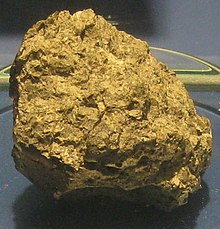
A recent discovery of a Martian meteorite, known as the Allan Hills 84001 (ALH84001), has sparked a new excitement in the search for evidence of past or present life on Mars.
The meteorite, which was found in Antarctica in 1984, was found to contain a vast array of organic compounds, including polycyclic aromatic hydrocarbons (PAHs) and other complex organic molecules.
Organic Compounds
The discovery of organic compounds in ALH84001 is significant because it suggests that the building blocks of life may have existed on Mars in the past.
PAHs, in particular, are of great interest because they are also found in many meteorites and are considered to be some of the most ancient and abundant organic compounds in the universe.
Additionally, PAHs have been found in a number of other Martian meteorites, suggesting that they may be a common feature of the Martian surface.
Possibility of Life on Mars
The presence of organic compounds in ALH84001 also raises the possibility that life may have once existed on Mars.
While the meteorite does not contain any direct evidence of past or present life, scientists have found evidence of microscopic fossils in the rock.
These fossils, which are believed to be the remains of ancient microorganisms, are similar in size and shape to bacteria found on Earth.
While the discovery of organic compounds in ALH84001 is exciting, it is important to note that the meteorite is over 4 billion years old, and it is unclear whether the organic compounds found in the rock are the result of past life on Mars or if they were formed through non-biological processes.
Future Possibilities
To further investigate the possibility of past or present life on Mars, scientists will continue to study the Martian surface with spacecraft and rovers, such as NASA’s Perseverance Rover, which is currently on the planet.
Additionally, future missions to Mars will focus on collecting samples of Martian soil and rock for analysis in laboratories on Earth.
The discovery of organic compounds in the Martian meteorite Allan Hills 84001 is a significant step forward in the search for evidence of past or present life on Mars.
While the meteorite does not contain direct evidence of life, the presence of organic compounds and microscopic fossils raises the possibility that life may have once existed on the red planet.
Further studies and missions to Mars will be crucial in understanding the potential for life on Mars and the potential for future colonization.