Bottom Science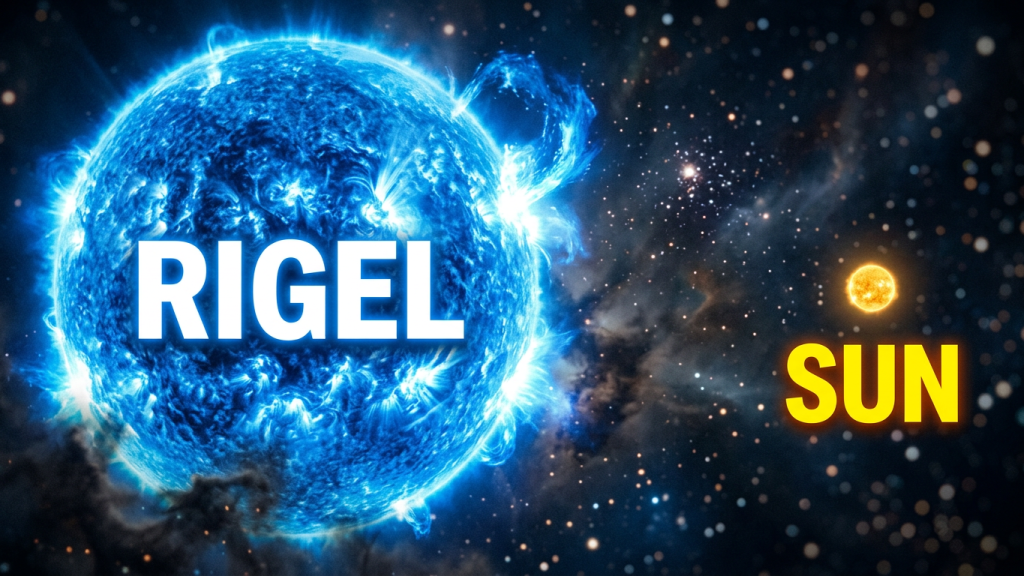
Video Explanation
Photometry Explained: Why Brightness Is Lying to You
Have you ever looked up at the night sky and assumed that the brightest star must be the most powerful one?
It seems like a reasonable assumption. After all, brighter objects usually produce more light. But in astronomy, things aren’t that simple. In fact, one of the first lessons every astronomy student learns is that brightness can be very misleading.
This is where photometry comes in.
Photometry is the science of measuring light from stars, galaxies, and other astronomical objects. Instead of relying on what our eyes see, astronomers use precise measurements to determine how much light is actually reaching Earth. These measurements help us understand the true nature of objects that are sometimes hundreds, thousands, or even millions of light-years away.
In this article, we’ll explore the basic concepts of photometry, learn the difference between apparent brightness and luminosity, and understand the famous equation that connects them.
What Is Photometry?
Photometry is the measurement of the intensity of light received from astronomical objects.
Whenever astronomers observe a star through a telescope, they are not simply taking a picture. They are measuring the amount of light arriving at their instruments. This information allows them to compare stars, estimate distances, study stellar evolution, and even discover planets orbiting distant stars.
Without photometry, much of modern astronomy would not be possible.
Why Your Eyes Can Fool You
Imagine holding a small flashlight just one meter away from your face.
Now imagine a giant stadium floodlight placed several kilometers away.
Which one appears brighter?
Most likely, the flashlight.
But does that mean the flashlight produces more light?
Of course not.
The flashlight only appears brighter because it is much closer to you.
Stars behave exactly the same way.
A nearby average star may appear brighter than a giant star that produces thousands of times more energy simply because the giant star is much farther away.
This is why astronomers never judge a star by its appearance alone.
Apparent Brightness
The brightness we observe from Earth is called apparent brightness.
It tells us how bright an object appears to an observer.
Apparent brightness depends on two things:
- How much light the object actually produces.
- How far away the object is.
This means two stars with completely different properties can look almost identical in the night sky.
A powerful distant star may look faint, while a much weaker nearby star may appear brilliant.
Luminosity: A Star’s True Power
Unlike apparent brightness, luminosity measures the actual energy produced by a star.
It is the total amount of energy a star emits every second in all directions.
Think of luminosity as the star’s true power output.
No matter how far away you move, the luminosity of the star never changes.
Only the amount of light reaching you changes.
This is one of the most important ideas in astrophysics.
The Relationship Between Brightness and Distance
Astronomers use a simple equation to relate these quantities:
F = L / (4πd²)
where:
- F = Apparent Brightness (also called Flux)
- L = Luminosity
- d = Distance between the star and Earth
- 4πd² = Surface area of an imaginary sphere over which the light has spread
This equation is commonly known as the Inverse-Square Law of Light.
Why Does Distance Matter So Much?
Imagine placing a glowing light bulb in the middle of empty space.
The light spreads equally in every direction.
As it travels farther away, it covers a larger and larger imaginary sphere.
The surface area of that sphere is:
4πd²
The star is still producing the same amount of light, but that light is now spread over a much larger area.
As a result, less light reaches each square meter.
That is why distant stars appear dimmer.
The Importance of the Distance Squared
The most important part of the equation is the d².
Brightness does not decrease in direct proportion to distance.
Instead, it decreases with the square of the distance.
For example:
- Double the distance → Brightness becomes 1/4
- Triple the distance → Brightness becomes 1/9
- Four times farther → Brightness becomes 1/16
- Ten times farther → Brightness becomes 1/100
This rapid decrease explains why many incredibly powerful stars appear as tiny points of light in our night sky.
A Real Example
Our Sun is an average-sized star.
There are many stars in our galaxy that are thousands or even hundreds of thousands of times more luminous.
So why does the Sun appear so bright?
Because it is incredibly close to Earth.
Now consider a massive blue supergiant such as Rigel.
Rigel produces vastly more energy than the Sun, yet it appears as just another bright star in the night sky because it is hundreds of light-years away.
Distance changes appearance—but it does not change a star’s true power.
Why Photometry Is Important
Photometry is much more than measuring brightness.
It helps astronomers:
- Measure the brightness of stars and galaxies.
- Estimate distances across space.
- Study how stars evolve over time.
- Discover exoplanets using tiny changes in brightness.
- Observe exploding stars called supernovae.
- Understand the structure and evolution of the universe.
Every modern telescope, from ground-based observatories to powerful space telescopes, relies on photometric measurements.
Final Thoughts
The next time you look at the night sky, remember that your eyes only tell part of the story.
The brightest-looking star is not always the most powerful one.
A faint star may actually be producing thousands or even millions of times more energy—it simply happens to be much farther away.
That is why astronomers rely on photometry instead of appearances.
By measuring light carefully and applying the inverse-square law, they can uncover the true nature of stars scattered across the universe.
Sometimes, the universe isn’t trying to fool us.
It’s simply reminding us that distance can completely change what we see.