Shubham Kalamkar
The first thing that comes to your mind when you read about the universe, galaxies, stars, and probably a telescope is – “how a particle-like neutrino has something to do with understanding the universe?” I would say in science, everything is related to each other. Neutrinos are more related to the field of particle physics but till the end of this article, you will be able to understand how neutrinos would help to address questions of the universe. Let’s understand what exactly neutrinos are!
What is a Neutrino?
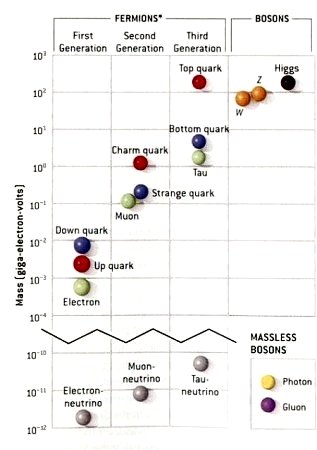
Neutrino is an elementary particle named as it is electrically neutral and has so little mass that it was long thought to be zero. 100 trillion neutrinos are passing through our bodies every second but most of them never react at all. The mass of neutrinos is much smaller than any other elementary particles. Generally, the mass of particles is expressed in terms of an electron volt(eV). The sum of the mass of 3 neutrinos is less than 1 eV and that of Electron is near about 5,11,000 eV.
Types of Neutrino

There are 3 types of flavors (what we call them in the scientific language!).
electron neutrinos(νe), muon neutrinos (νμ)), or tau neutrinos (ντ).
The neutrino, created with a specific flavor is associated with its discrete mass. Neutrinos have a unique ability to change their form or flavor. For example, if at the source electron neutrino is observed but at a distant detector, it would become a muon or tau neutrino. This change in flavor is known as neutrino oscillation.
Sources of Neutrinos

Neutrinos are created by radioactive decay, the following are important sources of neutrinos.
- When cosmic rays hit atoms.
- Reactions which happen at the core of stars
- Cosmic nova, supernova, and hyper-nova
- Beta-decay of the atomic nucleus
- Nuclear reaction
You must have thought, what is beta decay? Okay, so frankly speaking its not very important for us now still if you wanted to know then you may watch the below video or read on Wikipedia.
https://youtu.be/uqAA_D9Mi_I
https://en.wikipedia.org/wiki/Beta_decay
Missing Neutrinos and the Study of Neutrino Oscillation
Now let’s get further into the details of the neutrino detection. It’s very important to know how detectors detect neutrinos. I’m pleased to explain because you will get to know how a big mystery has been solved by just using the different detectors and comparing data. It all started with the detection of neutrinos. During the 1960s everyone observed the variance in flux predicted by sun luminosity and experimental data. Ray Davis was the 1st person who actually detected electron neutrinos but it was only about one-third of the expected number. This missing neutrino problem became a mystery for decades.
Super-Kamiokande lab and Sudbury Neutrino Observatory (SNO)
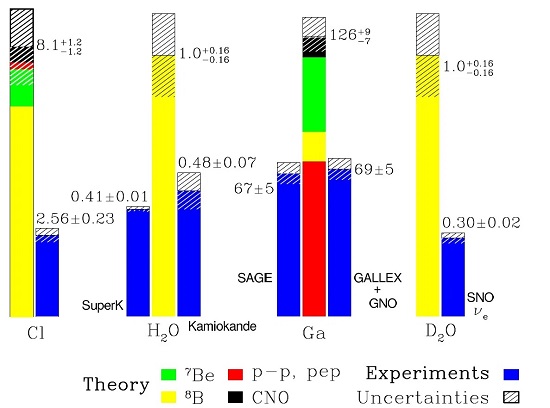
Here, we will only be focusing on work done at the Super-Kamiokande lab and Sudbury Neutrino Observatory (SNO).
Super-Kamiokande was an advanced version of the Kamiokand observatory. We will discuss the Kamiokande observatory in the later part of this blog. Kamiokande led to great success in the detection of solar neutrino and neutrino astronomy. Kamiokande helped to understand that the sun is a potential source of solar neutrino.
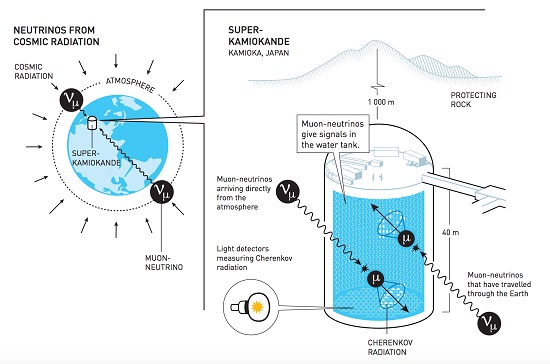
Super-Kamiokand observatory started working in 1996 and within two years i.e. in 1998, initial experimental proofs supported the theory of neutrino oscillation as neutrino must have non-zero mass to oscillate. As we knew that neutrinos react rarely so they can easily pass through any surface, which could be a reason why neutrino detectors are built underground. The majority of charged particles, cosmic rays can not penetrate the surface of the earth hence they can not interfere in neutrino detection.
The super Kamiokande consisted of 3000 tones of pure water along with 1000 photomultiplier tubes. As you can see in the above picture that as electron neutrino interacts with nuclei of water or electron, it can produce charged particles which will result in the production of light. This process of production of light is known as Cherenkov radiation. This produced light is detected, recorded, and amplified for further analysis.
Neutrino Flux
John Bahcall was the 1st person who predicated the neutrino flux coming from the sun. It took almost 3 years to get experimental data. In 1966 Ray Davis carried out some experiments and the results were inconsistent. The observed flux was one-third of the expected. For the next 2 decades, Ray Devis improved the accuracy of the detector and rechecked all the calculations but still, the problem persisted. Later in 1968 B.Pontecorv and V. Gribov hypothesized Neutrino oscillations.
It took another 30 years to prove the theory. Finally prof. Takaaki Fajita and Arthur McDonald gave clear experimental proofs in 1998 and 1999 respectively. They proved that neutrino oscillation takes place when it travels from the sun to earth and it must have non-zero mass to oscillate. Prof. Takaaki Fajita and Arthur McDonald got awarded the Nobel prize in 2015 for their contribution to physics.
Sudbury Neutrino Observatory(SNO)


Started in 1999 with the primary objective was to detect solar neutrino and study neutrino oscillation. The thing which made SNO different from others was the use of heavy water. Herb Chen suggested using heavy water because according to him,2 types of reaction would take place. 1st reaction is sensitive to all flavor of neutrino and another reaction sensitive to only electron neutrino. This was a great advantage of using heavy water. Later SNO’s Experimental data matched with the predicted Neutrino flux.
Neutrinos as a Messenger of Cosmological Events
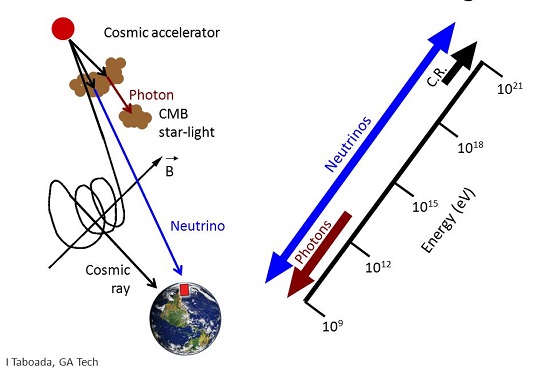
As we had seen that most of the cosmological events can be a source of Neutrinos. For a long time, cosmic rays were used to study activities happening in distant galaxies but cosmic rays easily get distorted with a magnetic field. In the case of Neutrinos, it can travel without getting interacted.
In 1968 scientists detected solar Neutrino in the Homestake experiment. Later many advancements took place in the field of neutrino astronomy.
Kamiokande and other observatories are experimenting and collecting data to study different cosmological events. ln 1987 a supernova 1987A burst out of thermal Neutrinos which was detected by the Kamiokande observatory. That supernova is situated about 160,000 light-years far from us.
In stars, nuclear fusion takes place naturally and it is difficult due to extreme conditions to study processes occurring at the center of the sun. Neutrino is generated simultaneously and easily pass outside without change in its nature. The energy and amount of Neutrinos could tell us a lot about the process happening at the center of stars. The most important thing is that Neutrinos can easily pass through black holes. I think neutrino would help scientists to fetch Nobel prizes in the field of neutrino astronomy and black-hole physics.
Now you can understand why neutrinos are called cosmological messengers. Since 1st experimental detection, many gigantic detectors are built just to study cosmological activities.
Asymmetry in Matter and Antimatter
Neutrinos are 2nd most abundant particles in the universe after photons. Big bang theory suggested that matter and anti-matter were created equally. If that was the case then there shouldn’t exist any matter in the universe. There is an immense amount of matter that exists in the Universe. Something similar is happening with neutrinos.
Related | NASA’s Discovery of Parallel Universe – Here’s the Real Truth
Why there is so huge amount of neutrinos exist? Scientists believe that neutrino-antineutrino asymmetry could help us understand the abundance of matter. To be specific, reason for the small size of a neutrino would help us to answer some questions. We will talk about asymmetry in the next blog as this topic is a whole new field of physics.